
Architects & Designers
Your tile selection is a big part of how a space feels, but on many projects the specified tile is bought by one company and laid by another. When something goes wrong (a substitute product, a long lead time, a colour batch that doesn’t match), it falls through the gap between them.
With Astral Tiling, you can buy the tiles from us as well as have them installed. Choose from the tiles we hold in stock, or specify any tile from any supplier and we’ll source it. Then decide whether you just want the tiles supplied, or want us to supply, waterproof and lay them too.
Three ways to work with us
1. Buy tiles direct from our stock
Browse the tiles we hold in stock and specify them straight into your finishes schedule. Each tile in our catalogue shows sizes, finishes, slip ratings where available and how much we currently have, so you know it’s available before you specify it. Buy supply only, for the builder or tiler of your choice.
2. Our stock, supplied and installed
Specify a tile from our stock and have us install it as well. We supply the tile, waterproof the wet areas and lay it, so one company is accountable for the product, the membrane and the finish.
3. Any tile you specify, sourced by us
Specified a tile we don’t stock? We’ll source it from any supplier and include it in our price, supply only or supplied and installed.
How a specified-tile order works
- Send us your finishes schedule or tile selection, with drawings if you have them.
- We price supply and installation together, including waterproofing, so the builder sees one clear number.
- We arrange samples and technical data: spec sheets, slip-resistance ratings and installation requirements.
- We order to the program, tracking lead times and batch numbers so the right tile arrives when it’s needed.
- We install and hand over, with the finish you designed.
What you can count on
- Any tile, any supplier: you’re not limited to our catalogue
- Honest advice if a selection is likely to cause problems on site
- Help with slip-resistance ratings for wet areas, ramps and external areas
- Practical input on substrates, movement joints, setting out and grout colour
- Early warning on long lead times and discontinued lines
- Sign-off on alternatives before anything is substituted
- Installation systems from Mapei, Ardex and Dribond, with technical data sheets for your documentation
Specifying tiles for commercial projects
Getting the specification right at design stage avoids costly substitutions, variations and defects on site. These are the points we see make the biggest difference.
Slip resistance
New pedestrian surfaces are classified under AS 4586, using the wet pendulum (P0 to P5) and oil-wet ramp (R9 to R13) tests. Standards Australia HB 198 recommends minimum classifications for different locations, and the NCC sets slip-resistance requirements for areas such as ramps and stair treads. Specify the classification needed for each area, not just a tile code, and ask for the manufacturer’s test certificate.
Substrates, flatness and large-format tiles
Large-format and thin porcelain tiles are unforgiving of uneven floors. Allow for screeds or levelling where slab tolerances won’t suit the tile, and specify an adhesive suited to the format, typically an improved C2 adhesive with S1 or S2 deformability under ISO 13007 for large or heavy tiles, external areas and substrates subject to movement.
Movement joints
AS 3958.1 (Guide to the installation of ceramic tiles) calls for perimeter joints, joints over structural and control joints, and intermediate joints in large areas. Showing movement joint locations on the drawings, and coordinating them with the setting-out, avoids cracked and drummy tiles later.
Waterproofing
Specify the membrane system alongside the tile, not separately. AS 3740 covers domestic wet areas and AS 4654.1 and 4654.2 cover external above-ground membranes such as balconies, podiums and planters. Falls, set-downs, hobs and drainage outlets need to be detailed before the slab is poured.
Grouts and sealants
Choose grout for the area’s use, not just its colour. Epoxy grouts suit commercial kitchens, wash-down and chemically exposed areas, while cement-based grouts suit most other spaces. Flexible sealant belongs at internal corners, changes of plane and junctions with other materials.
Lead times, batches and spare stock
Imported tiles can have long lead times, and shade and calibre vary between batches. Specify a single batch for each area where possible, and allow for spare tiles for future repairs.
What to include in your finishes schedule
- Tile code, supplier, size, thickness and finish
- Slip-resistance classification (P and R rating) for each area
- Laying pattern and setting-out start points
- Grout type, colour and joint width
- Adhesive and waterproofing system, or “to tiler’s recommendation”
- Movement joint locations and sealant colour
- Trims, edge details and transitions to other floor finishes
- Falls to waste and drainage outlets
- Spare stock to be handed over
How we help during design
- Early design review of tile selections, falls and junction details
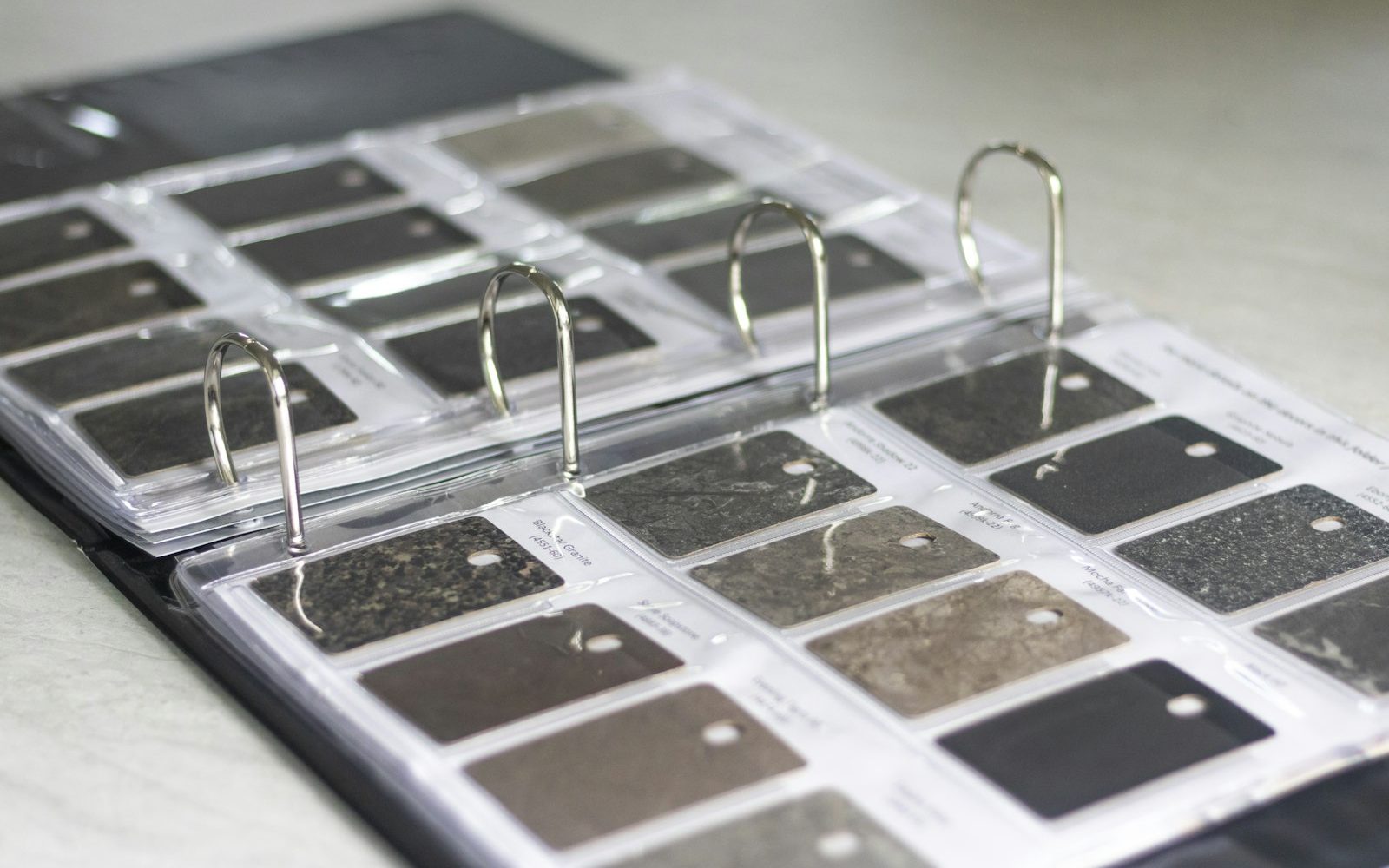
- Samples and sample boards from our stock or your chosen supplier
- Test panels and mock-ups for feature areas
- Alternatives offered only with your written sign-off
- Technical and safety data sheets for every adhesive, grout, membrane and screed we use, in our technical library
This guidance is general. Always confirm requirements against the current Australian Standards, the NCC and the manufacturer’s data sheets for your project.
For builders
Whether the architect has specified one of our stocked tiles or a product from another supplier, we can take the supply off your hands as part of our tiling package. One subcontractor, one order and one point of contact for tiles, waterproofing and installation.